
CONSERVATION TIPS
Rain Catchment Systems
Rain catchment systems are easy and effective tools for conserving water outdoors. The captured nonpotable rainwater can be used in a number of activities, including watering lawns and plants, as well as washing tools, cars, and pets.
Residential Rain Barrel Catchment Rebate
If you purchase a 55-gallon rain barrel from a local retailer, you may qualify for a Water Sensible Rebate!
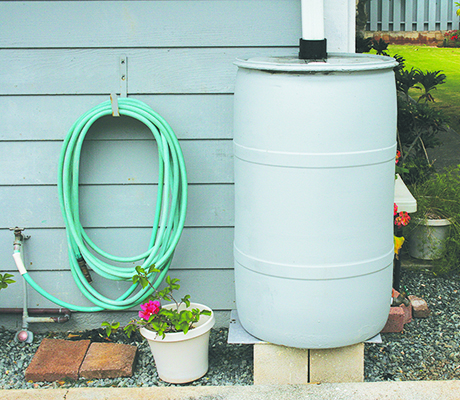
BWS Recycled Rain Barrel Program
Watch our social media and this webpage for information on our next free rain barrel workshop.
The last workshop was held on Saturday, March 28, 2026, at the Hālawa Xeriscape Garden. Attendees had the opportunity to to purchase either one 35-gallon ($30) or one 55-gallon ($40) rain barrel following the workshop.
Note: Barrels purchased from BWS do not qualify for Water Sensible rebates.
Mahalo for supporting water conservation. Every drop counts!
Frequently Asked Questions
What is rain catchment?
Rain catchment via recycled barrels and totes is an easy and effective method for conserving water, especially outdoors. Rain barrels or totes are placed outside of the house to collect rainwater - this water can then be used for nonpotable purposes, such as watering the garden, watering indoor plants, and washing tools, cars, and pets. During a water service outage, the water can be used for flushing toilets.
Where can I go to learn more about catchment systems?
 Additional information about rain barrels can be found at the City & County of Honolulu, Department of Facility Maintenance, Storm Water Quality Branch’s online Learning Center, including this set of fact sheets: Sustainable Practices for Homeowners.
The University of Hawaiʻi College of Tropical Agriculture and Human Resources (CTAHR) has great resources through their Rainwater Catchment Systems Program.
Can I make my own rain barrel?
Constructing your own rain barrel catchment system can be fun and easy! The supply list includes everyday items that may be obtained at your local hardware store. Step-by-step instructions can be found through an online search or you can check out the BWS instructional video or our publications archive.
Drilling & Threading Services
Do you have a plastic barrel that you want to convert into a rain barrel but need assistance in drilling and threading the hole? Drilling and threading services are being offered to barrel owners by the Master Gardeners at the Pearl City Urban Garden Center. Those interested may call (808) 453-6055 to schedule an appointment for Tuesday or Thursday between 9 a.m. and 10 a.m. or bring your barrel to their Second Saturday event.
Is a rain catchment safe for domestic use?
While rainwater catchment systems on individual homes are not regulated by the State of Hawaii Department of Health (DOH), the department encourages homeowners to take appropriate measures to help make the water they collect safe for domestic use. These measures include being proactive with the design, placement, maintenance and testing of their rain barrel catchment system. By taking those steps, homeowners will have greater confidence in their water quality and minimize the need for treatment or corrective action. Visit the DOH website to learn how to keep your rain barrel water catchment safe for use at home: http://health.hawaii.gov/sdwb/raincatchment/.
Where can I purchase a rain barrel?
There are three ways to purchase rain barrels locally:
- Local vendors often sell rain barrels. Also, you may check with local companies who use barrels for product storage and see if they have them available.
- Do it yourself rain barrels. Large trash cans may be used to construct a catchment system. Watch the BWS video on how to construct a trash can catchment or search online for other DIY resources.
- BWS periodically repurposes commercial barrels for catchment systems. If we have rain barrels available, there will be an online form available for interested parties to register for an instructional workshop where they can then purchase a rain barrel. BWS does its best to make rain barrels available, but the supply depends on the ability to obtain and process recyclable barrels from local retailers and agencies. When these do become available, workshops and current pricing for rain barrels will be posted on this website. Barrel sizes and prices are subject to availability and subject to change.
Why should I use a rain catchment system?
The Board of Water Supply (BWS) estimates that 50 percent of water use occurs outdoors. Because these systems use captured rainwater to irrigate your garden, they reduce the amount of potable (drinking) water used for nonpotable (non-drinking) purposes. Research shows that up to 600 gallons of water can be collected from just one inch of rain on a 1,000 square foot rooftop. That's enough water to fill 12 large fish tanks! Not only will the use of potable drinking water be reduced when you use a rain catchment system, but the total amount on the water portion of your service bill will be, too.
Where do I place my rain barrel and how do I maintain it?
Effective placement and routine maintenance of your rain barrel is required to keep it running smoothly and at an optimum level. Tips can be found in the BWS publications archive or via other resources found through an online search.
Can you connect multiple rain barrels together?
Yes, you can! Homeowners often choose to connect multiple rain barrels together to increase their water storage capacity. Instructions can be found online or you can check out the BWS publication archive for rain catchment construction, maintenance and configuration tips.
What is a rain tote?
A rain tote is a much larger catchment useful for those with large land areas and higher water use. Dimensions are 9 ft w x 47.75 ft d x 46 ft h. Maximum volume is 300 gallons which yields a weight of 2,490 lbs. Our totes are often used for native plant restoration projects. Given the size of a tote, it's important to consider the installation area and how the tote will reach its final destination, which should be flat, sturdy, and clear of hazards. Many of the tips are the same for rain barrels and rain totes. Before purchasing a large rain catchment, watch or read rain catchment resources on this website or those found through an online site search.